EVERYTHING IS VIBRATION
Consciousness, Vibration, and Reality: A Scientific Perspective on How Beliefs Shape Our World
For centuries, spiritual traditions have taught that reality is not something that simply happens to us, but something we actively participate in creating. Today, modern science — particularly neuroscience, quantum physics, and psychology — is beginning to explore ideas that echo these ancient insights. While science does not yet provide all the answers, growing evidence suggests that perception, belief, and consciousness play a far greater role in shaping our experience of reality than we once believed.
You Are Not Just a Body: Consciousness and the Human Experience
From a scientific standpoint, the human body is a biological system, but consciousness remains one of the greatest mysteries. Neuroscience shows that the brain does not directly experience reality — it interprets sensory data and constructs an internal model of the world. In other words, what we perceive is not reality itself, but a neurological representation of it.
This aligns with the philosophical idea that we are not merely physical bodies, but conscious awareness experiencing reality through the body. The body functions as a vehicle, while awareness is the observer navigating it.
Everything Is Vibration: The Physics Behind Matter and Energy
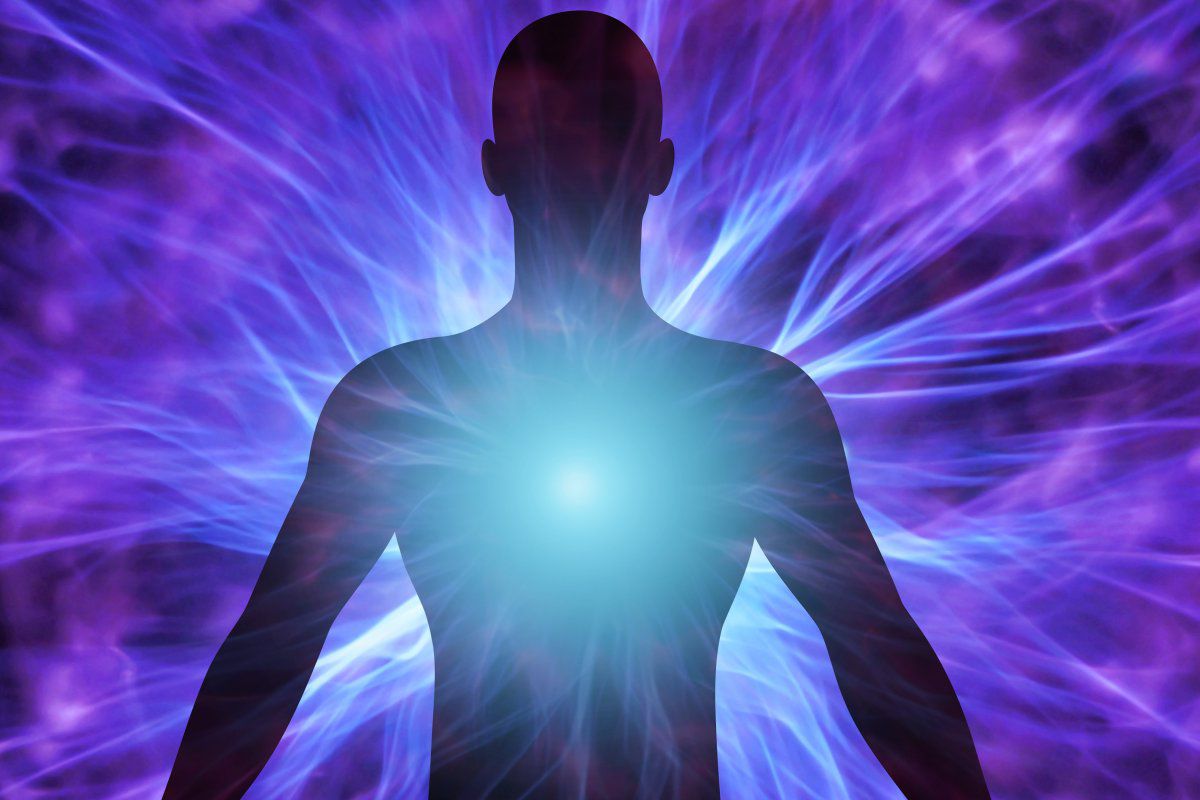
At the most fundamental level, physics tells us that all matter is energy. Atoms are composed of particles in constant motion, held together by electromagnetic forces. In fact, over 99.99999% of what we call “solid matter” is empty space, structured by invisible energy fields.
Even sound, light, and electromagnetic waves are forms of vibration measured as frequency. While thoughts and emotions are not vibrations in the same way as sound waves, they are electrochemical signals within the nervous system that influence hormonal responses, behavior, and perception — all of which shape how we interact with the world.
The Brain as a Reality Generator
Modern neuroscience supports the idea that the brain operates as a predictive machine. It constantly anticipates reality based on past experiences, beliefs, and expectations, then adjusts perception accordingly. This process explains why two people can experience the same event and interpret it completely differently.
This phenomenon is sometimes described as a “controlled hallucination” — not in the sense of delusion, but in the sense that the brain actively constructs reality rather than passively receiving it. Your beliefs act as filters, determining what you notice, how you interpret events, and how you respond emotionally.
Beliefs, Emotions, and the Subconscious Mind
Psychology has long shown that subconscious beliefs influence behavior, decision-making, and emotional responses. These beliefs shape habits, confidence levels, and even physiological stress responses. When beliefs are rooted in fear, doubt, or limitation, the nervous system remains in a defensive state, reinforcing those patterns.
Conversely, when beliefs are aligned with safety, purpose, and self-efficacy, the brain forms new neural pathways — a process known as neuroplasticity. This is how intentional thought patterns, emotional regulation, and visualization can gradually recondition the subconscious mind.
Quantum Physics and the Observer Effect
Quantum physics introduces a fascinating concept known as the observer effect, where the act of measurement influences the behavior of particles at the quantum level. While this does not mean thoughts magically change reality, it does suggest that observation and interaction are inseparable from outcomes at fundamental scales.
Some scientists interpret this as evidence that consciousness may play a more foundational role in reality than previously assumed. While the debate continues, it raises profound questions about the relationship between awareness and the physical universe.
Reality as a Feedback System
Your external reality can be understood as a feedback loop. Thoughts influence emotions, emotions influence behavior, and behavior influences outcomes. Over time, repeated internal patterns become external experiences. This is not about escaping reality, but about understanding how deeply perception and belief shape lived experience.
Changing reality, therefore, does not begin with force or control — it begins with rewriting internal programming.
Guidance, Intuition, and Pattern Recognition
Intuition can be described scientifically as the brain’s ability to process vast amounts of information subconsciously and deliver insights without conscious reasoning. This form of intelligence is often faster and more accurate than analytical thinking, especially in complex or uncertain situations.
When people speak of “signs” or “guidance,” they are often referring to heightened pattern recognition and awareness. What appears as coincidence may actually be the brain recognizing meaningful connections that were previously ignored.
The Pineal Gland and Conscious Awareness
The pineal gland plays a key role in regulating circadian rhythms through the production of melatonin. While some spiritual traditions attribute higher functions to it, science confirms its importance in sleep, perception, and neurological regulation — all essential for mental clarity and emotional balance.
Practices such as meditation, breathwork, and reduced sensory overload have been shown to improve nervous system regulation, which can enhance intuitive clarity and cognitive performance.
Rewriting the Matrix: Detaching from False Programming
What many refer to as “the Matrix” is not an external system to escape, but a network of inherited beliefs, conditioned fears, and unconscious patterns. True freedom comes not from running away, but from becoming conscious of these programs and rewriting them.
When fear, doubt, and negative emotional loops are released, perception expands. Reality does not change overnight — but your relationship to it does. And that shift alone can transform everything.
Final Thoughts
You are not here to live on autopilot. You are here to observe, choose, and create consciously. Reality responds not just to action, but to awareness aligned with intention.
By understanding how consciousness, belief, emotion, and perception interact, you reclaim your role as a participant — not a victim — in the unfolding of your life.